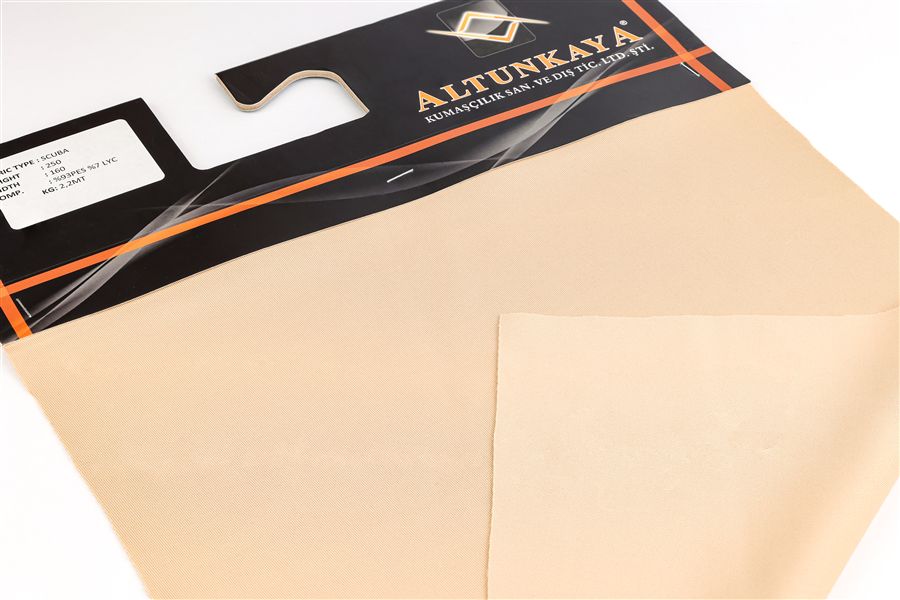
Fabrics that make you look slimmer are the ones with enough body to hold their own shape instead of taking yours. It is a question of structure, not thickness and not weight — a firm 250 g/m² double knit skims the body far better than a thin, soft jersey half its weight, because the thin one clings to every contour underneath it.
Which three properties actually matter?
- Body (structure) — the fabric resists draping into every hollow. Double knits do this; single jerseys mostly do not.
- Matte surface — shine reflects light and visually expands whatever it covers. A matte finish absorbs it. This is why satin is unforgiving and crepe is not.
- Recovery — the garment returns to shape through the day instead of gradually stretching out at the seat and knees.
Colour helps too, but far less than people assume. A dark garment in shiny clingy fabric still shows everything; a mid-tone garment in a structured matte knit does not.
Which fabrics work?
| Fabric | GSM | Why it works |
|---|---|---|
| Scuba | 250 | Double knit with firm recovery; holds a silhouette without stiffness |
| Neoprene (dalgıç) | 260–270 | Most structured of the group; ideal for defined shapes and panelling |
| Crepe knit (Zara Crep, Mira) | 230–240 | Textured matte surface, kills shine, drapes without clinging |
| Ottoman rib (selanik) | 290–300 | Vertical rib creates a lengthening line |
| Oshyo | 260–270 | Viscose-polyester with fluid drape and a dry, non-shiny hand |
Which fabrics work against you?
- Thin single jersey under 160 g/m² — clings and shows everything beneath it.
- Polyester satin — high shine plus fluid drape is the worst combination for this purpose.
- Heavy stiff fabrics with no give — they add visual bulk rather than skimming.
- Bulky pile fabrics in fitted cuts — fleece and plush are wonderful for outerwear and terrible in a close-fitting silhouette.
What is the vertical rib effect?
Ottoman rib (selanik) deserves a separate note. Its raised vertical ribs create continuous lines up the garment, and the eye reads those lines as height. At 290–300 g/m² in 100% cotton it also has real body. It is the one fabric on this list that works through geometry rather than surface finish.
What should producers consider?
For structured garments, specify a double knit at 230 g/m² or above with a matte finish and stated recovery, and request the sample after washing rather than off the roll — finishing agents can make a fabric feel firmer than it will be in the customer's hands. For shapewear and support panels, move to a higher elastane ratio (8–12%) rather than a heavier fabric; compression comes from the fibre, not from weight.
Where can you source these fabrics?
Scuba, neoprene, crepe knits and ottoman rib are all held in stock with a 50 kg minimum per colour and 2–5 business day delivery. Certification documents (GOTS, BCI, OEKO-TEX Standard 100) are available on request.