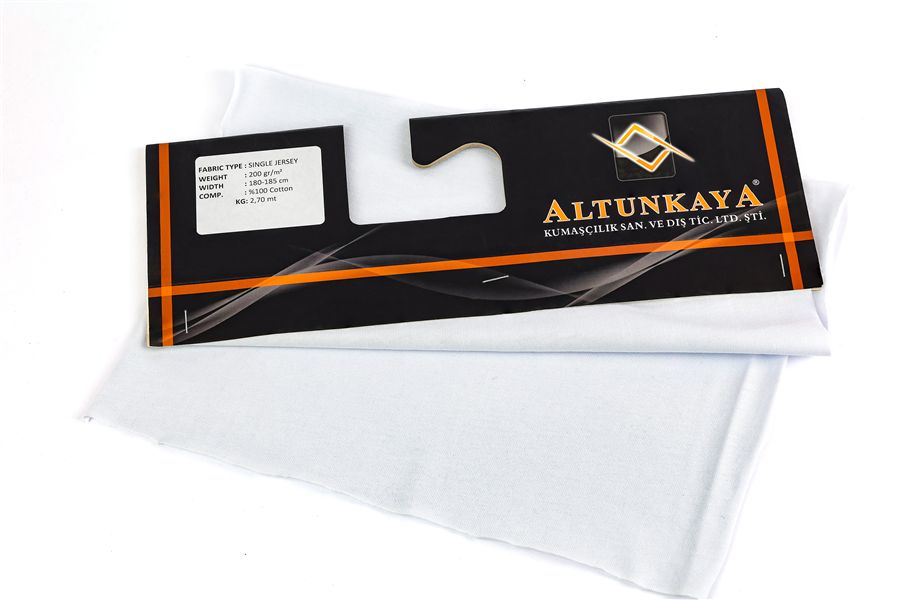
The right fabric for printing depends on the printing method, and the two most common methods want opposite fibres. Sublimation needs polyester; screen and DTG printing want cotton. Choosing the fabric before choosing the method is the most common and most expensive mistake in printed apparel.
Which print method suits which fabric?
| Method | Required fibre | Best fabric | Result |
|---|---|---|---|
| Sublimation | Polyester (min. 65%) | Polyester pique, scuba, polar | Permanent, no hand, unlimited colours |
| Screen print | Cotton or blend | Combed cotton jersey | Vivid, economical at volume |
| DTG (direct to garment) | Cotton (min. 80%) | Combed cotton jersey | Photographic detail, low volume |
| Transfer / heat film | Any | Smooth-faced knits | Fast, but a visible hand |
| Reactive / pigment (roll) | Cotton / viscose | Jersey, french terry | Soft hand, deep penetration |
Why do sublimation and cotton not mix?
Sublimation dye bonds into polyester molecules under heat. Cotton has nothing for it to bond to, so the image washes out almost immediately. A 50/50 blend gives a deliberately faded, vintage look — which is a legitimate design choice, but only if it is intended.
How does surface quality affect print sharpness?
Print edges are only as clean as the surface underneath them. Combed cotton beats carded for exactly this reason: fewer protruding short fibres, so less halo around fine lines and small text. On pile fabrics such as welsoft, sherpa and polar, the dye must reach the base of the pile, which is why printed pile is a specialist job and not every dyehouse does it well.
How do pre-treatment and shrinkage affect printing?
Print is applied to the fabric or garment at a fixed size. If the fabric then shrinks 6%, the graphic distorts. Any fabric destined for printing must be properly compacted and heat-set first — ask for the shrinkage figure before the print order, not after.
How are pile and jacquard fabrics printed?
Printing puts an unlimited-colour graphic on the surface; jacquard builds a pattern into the pile structure itself. Print gives free design and lower minimums but softens over time; jacquard is raised and permanent but limited to two or three colours. Printed sherpa, welsoft and polar start at 50 kg; custom jacquard requires 100 kg and 20-25 working days.
Altunkaya Tekstil produces printed sherpa, welsoft and polar plus print-ready combed cotton and polyester pique — min. 50 kg, OEKO-TEX certified. WhatsApp: +90 536 304 67 29